

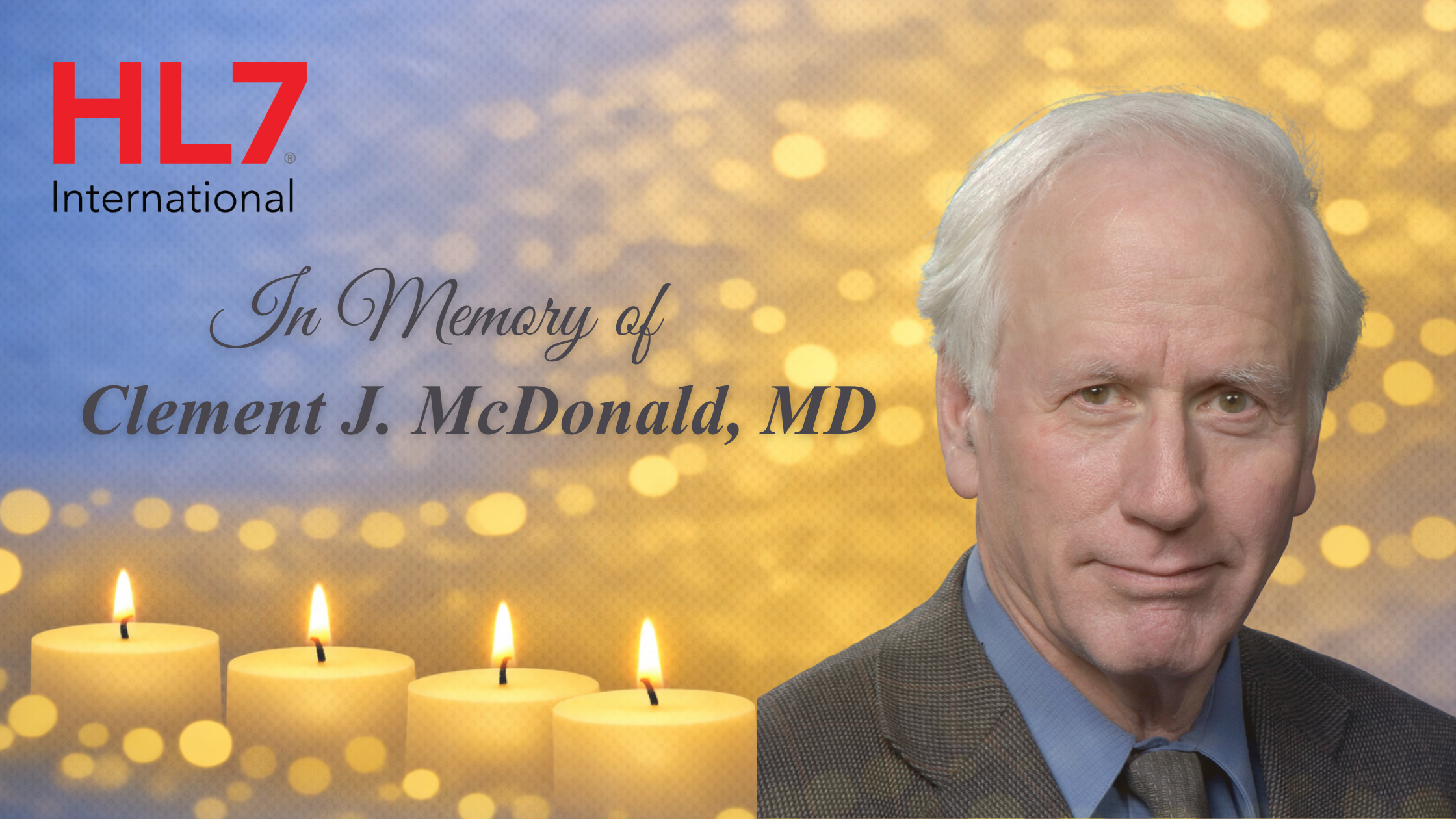
Today we honor the life and legacy of Clement J. McDonald, MD, who passed away on May 21, 2026.
Known worldwide as the one and only "Clem", he was a luminary in the field of biomedical informatics. Clem was a titan, world renowned for his innovations in electronic medical records, clinical decision support, multi-institution health data exchange, and especially in the global standards that enable computers to share and understand health data.
As a co-founder and life-long member of HL7 International, Clem's vision for interoperability enabled by consensus standards is encoded in our DNA.
A Pioneering Career
Clem grew up on Chicago's West Side, graduated from Notre Dame in three years, and attended the University of Illinois College of Medicine. He completed his internal medicine residency at Cook County Hospital and the University of Wisconsin, after which he joined Indiana University and the Regenstrief Institute in 1972. There he built one of the world's first electronic medical record systems and published the first randomized controlled trials demonstrating that computerized clinical decision support could improve care.
He rose through the academic ranks at the Indiana University School of Medicine to become Distinguished Professor of Medicine and the Sam Regenstrief Professor of Medical Informatics, and served as Director of the Regenstrief Institute from 1990 to 2006. He also developed the Indiana Network for Patient Care, a groundbreaking statewide health information exchange. Throughout this time, he also practiced primary care internal medicine in a safety-net clinic for more than 25 years (that ran on the EMR he created).
In 2004, Clem joined the U.S. National Library of Medicine where he first served as Director of the Lister Hill National Center for Biomedical Communications and Scientific Director of its intramural research program, and later serving as Chief Health Data Standards Officer — a position he held until his passing.
A Champion of Health Data Standards
Clem was one of the earliest and most persuasive voices for data standards in medicine. In 1983, he published the first call for electronic clinical data exchange standards, and in 1984 convened a panel (including Ed Hammond and Don Simborg) at SCAMC to present a specific draft message format for laboratory results. That work evolved into ASTM E1238-88 — the first consensus standard for exchanging clinical results. Clem then worked with Wes Rishel to incorporate that clinical reporting specification into HL7, where it became the basis of HL7's observation ordering (parts of Chapter 2) and reporting (Chapter 7). He chaired both the ASTM and HL7 Orders and Observations committees for years, keeping them in sync. Those observation messages became some of the most widely used clinical data standards in the world.
Recognizing that messages without standardized content codes could not achieve true semantic interoperability, Clem co-founded the development of LOINC (Logical Observation Identifiers Names and Codes) in 1994. Designed to work within HL7 exchange standards, LOINC solved the critical challenge of assigning a universal identity to clinical observations. Today, LOINC contains well over 100,000 terms and is used in more than 190 countries. Clem also co-developed UCUM (the Unified Code for Units of Measure), which has been adopted by many HL7 and other standards.
Clem actively developed HL7 standards throughout his career. He was a major contributor to the genomics and newborn screening components of the HL7 V2 Laboratory Results Interface (LRI) Implementation Guide and the FHIR Genomics Reporting Implementation Guide. He also helped enhance the FHIR Questionnaire resource and the Structured Data Capture (SDC) specification, including building open-source software tools to generate executable forms.
Honors and Awards
Clem's significant and sustained contributions have been recognized with virtually every major honor in the field, including the ACMI Morris F. Collen Award for lifetime achievement, election to the National Academy of Medicine, fellowship in the American College of Medical Informatics and the International Academy of Health Sciences Informatics, and the Sagamore of the Wabash — the state of Indiana's highest civilian honor. An endowed chair and a research center at the Regenstrief Institute bear his name. He was elected in the inaugural class of HL7 Fellows and LOINC code 100000-9 permanently honors his achievements.
Clem was known as much for his character as his accomplishments. He was endlessly curious, generous with his time and ideas, undeterred in pursuing his vision for getting health data to flow everywhere it is needed. He was a dedicated teacher, serving as a mentor to many informatics fellows and trainees. Many of his achievements were enabled by a sincerity and skill in building trust and a spirit of collaboration. His approach was equal parts wit and whimsy. At professional meetings, he loved giving a rendition of "Danny Boy" with colleagues. He fueled his intense productivity with Oreos and Diet Coke. He will always be remembered for his dedication, innovation, and hands-on contributions helped develop and continually improve medical informatics and health data standards.
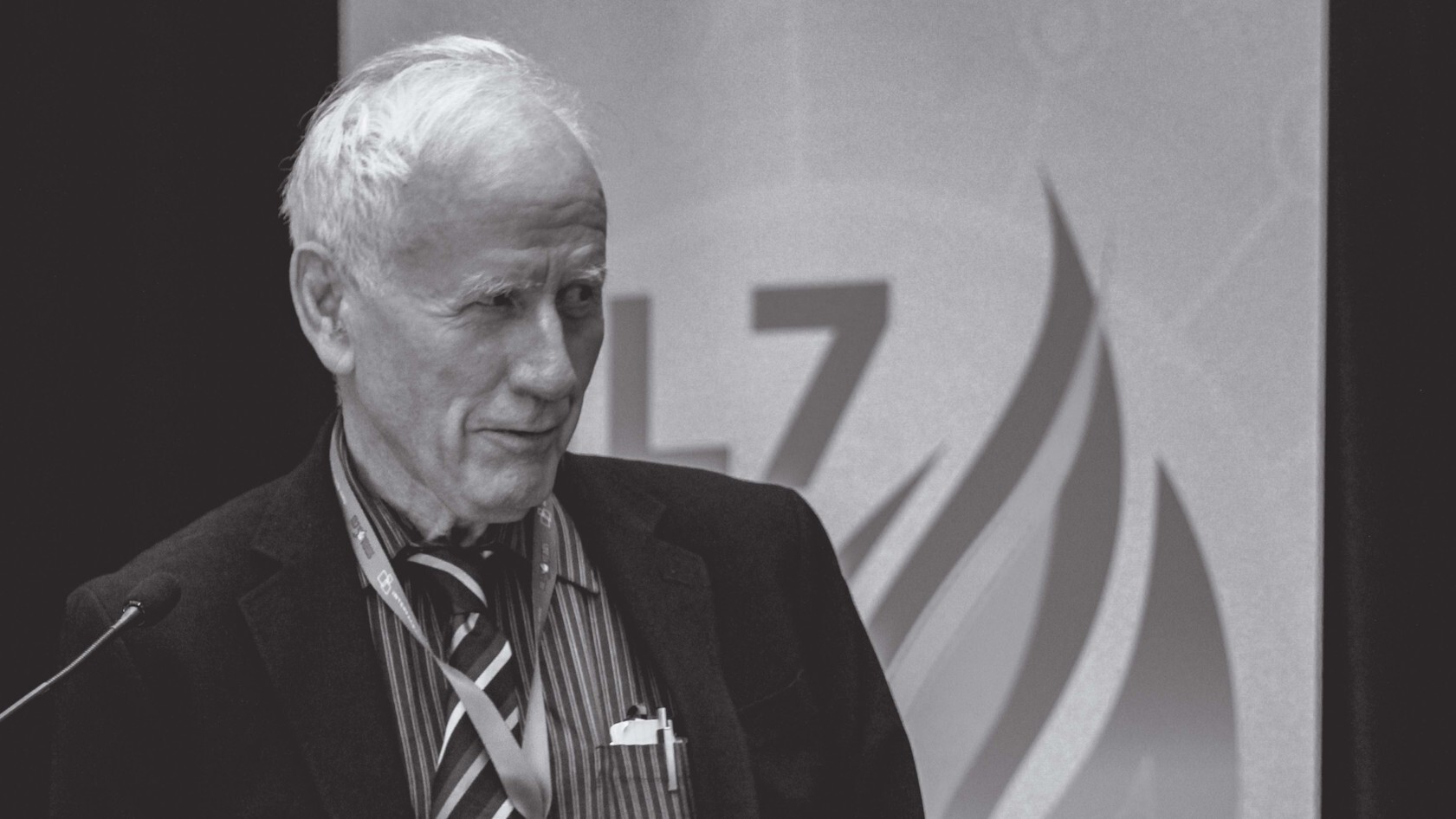
Clem McDonald, MD delivery an HL7 Plenary address: Just Breathe It In (2016)
Reflections
Ed Hammond, PhD, Chair Emeritus of HL7, shared this remembrance:
“My first awareness of Clem came when I was asked to review his proposal to build a medical record system for the Regenstrief Institute. Even though my team at Duke had already built an EMR, I recommended supporting Clem’s vision — a decision I remain grateful for.
We entered the field together as the ‘new kids’ among leaders like Morrie Collen, Homer Warner, Don Lindberg, and Octo Barnett. During a walk in the woods at one early meeting, Clem and I decided we would insist on presenting our work. The group agreed, and that moment marked the beginning of a lifelong friendship.
Clem was a true brother. We agreed, we disagreed, and we pushed relentlessly for standards. Under his leadership we created ASTM 1368, and later he became the driving force behind the laboratory components of HL7 Version 2. At the famous Tyson’s Corner meeting, Clem and I fought side by side for positionally defined data elements — and won.
Our friendship extended far beyond work. We traveled the world together, often mistaken for one another with our unruly white hair and animated conversations. We earned the nickname “twins.” We made Irish pubs our unofficial headquarters in every city we visited. I could write a book about our adventures. I already miss him immeasurably. I loved Clem.”
Daniel Vreeman, DPT, Chief Standards Development Officer, HL7 International
Daniel Vreeman, Chief Standards Development Officer at HL7 International, said “Dr. McDonald was a true visionary who made electronic medical records and health information exchange a reality for improving care quality and efficiency through data standards. His contributions to HL7 and the broader informatics community laid a foundation that will continue advancing interoperability and improving healthcare around the world for generations to come.”
HL7 International extends its deepest condolences to Clem's family. Those wishing to honor Clem's memory may plant a memorial tree or send flowers through the Flanner Buchanan funeral home.